
Blog
Why Indians Are Choosing Generic Medicines Over Branded
Introduction
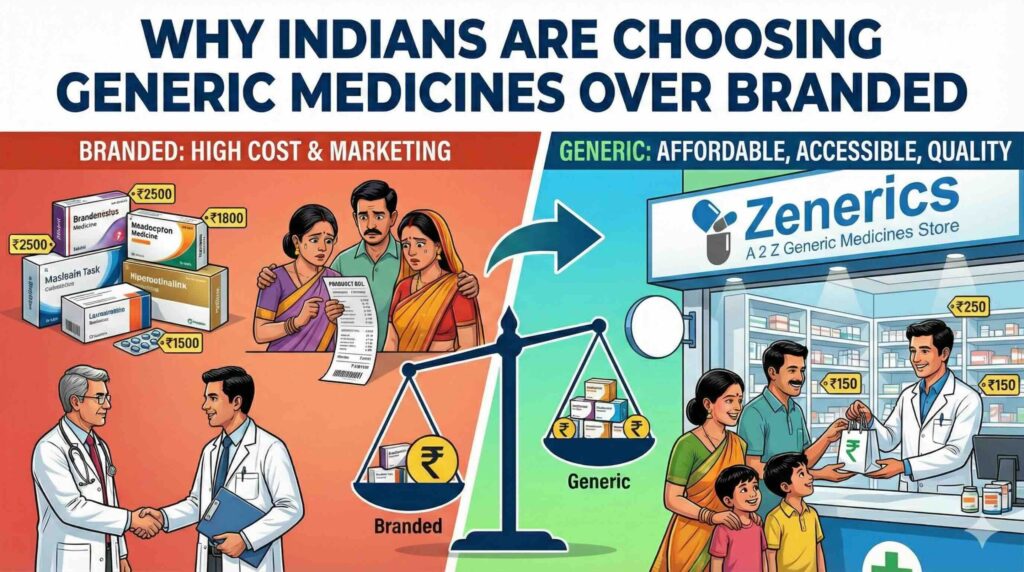
Every month, a middle-class family sits at the dining table with a pile of medical bills. One parent has diabetes, another has high blood pressure, and someone else takes thyroid tablets. When the chemist slips in a generic alternative and the bill suddenly drops by almost half, the family naturally starts asking why so many Indians are choosing generic medicines over branded ones.
This question matters because medicine is not a luxury. It often decides whether we can keep working, caring for our families, and staying out of hospitals. Generic medicines now account for close to 80% of the Indian pharmaceutical market, yet a doubt still hangs in the air: if they are cheaper, are they really as good?
India’s Growing Importance in generic drug API manufacturing has established the country as the pharmacy of the world for generics. Our factories ship large volumes of affordable generic medicines to countries with very strict regulators, including the USA and the UK. At the same time, platforms like Zenerics are helping Indian patients access the same quality at home, without paying branded-price premiums.
In this article, we look at why Indians are choosing generic medicines over branded ones: how generics match branded drugs in effect, where the savings come from, what the government is doing, how doctors’ habits are shifting, and how an online pharmacy for generic medicines such as Zenerics fits into this picture.
Key Takeaways
- Generic medicines usually cost 30–80% less than branded medicines while giving the same medical effect. The gap comes from lower research and marketing expenses, not from shortcuts in safety or strength.
- In India, both branded and generic medicines must meet the same CDSCO approval rules and be produced in WHO-GMP certified plants. The active ingredient, dose, and performance must match, so the cheaper option can still be trusted when bought from a reliable source.
- Government programs such as Jan Aushadhi Kendras under the Pradhan Mantri Bhartiya Janaushadhi Pariyojana have expanded access to low-cost generics across cities, small towns, and many rural areas.
- New NMC rules encourage doctors to prescribe by generic name instead of brand name. Online pharmacies make prices more transparent, shifting the focus from brand loyalty to value and evidence.
- Zenerics brings these threads together by supplying genuine generics, partnering with WHO-GMP certified manufacturers, double-checking orders, and delivering across India, with cashback and free shipping on qualifying orders.
Understanding Generic Medicines And What Makes Them Identical Yet Affordable

When we talk about generic medicines, we mean drugs that have the same active ingredient, strength, dosage form, and intended use as a known branded medicine. If a branded tablet uses a certain chemical in 500 mg strength, the generic version uses the same chemical in the same 500 mg strength and is taken in the same way—tablet, capsule, or syrup—for the same medical purpose.
The key scientific idea behind generics is bioequivalence. This means a generic tablet must release the same amount of active ingredient into the blood in the same time frame as the branded one. If the body receives the same dose at the same speed, the medical effect is expected to match. Regulators review this carefully before they allow a generic to be sold.
As the World Health Organization explains, a generic medicine is intended to be interchangeable with the originator product, manufactured according to quality standards, and proven to have the same clinical effect. — World Health Organization
In India, the Central Drugs Standard Control Organisation (CDSCO) checks both branded and generic drugs under the same safety and quality rules. Factories must follow World Health Organization – Good Manufacturing Practices (WHO-GMP), which set clear expectations for hygiene, quality checks, and documentation. Many plants that supply Indian generics also supply medicine to strict overseas markets.
A familiar example is paracetamol, the generic name for a common pain and fever medicine. Brands like Crocin or Calpol are just branded versions of the same active ingredient. The relief we feel comes from paracetamol itself, not from the brand name.
So if the drug is the same inside, why are generics cheaper? The answer lies in cost structure:
- the original brand spends heavily on discovery, long clinical trials, and promotion
- generic manufacturers use the known formula once patents expire
- several companies often make the same generic, which increases competition and volume
These factors pull prices down sharply—one major reason why Indians are turning to generic medicines for long-term treatment.
The Primary Driver: Massive Cost Savings Without Compromising Quality
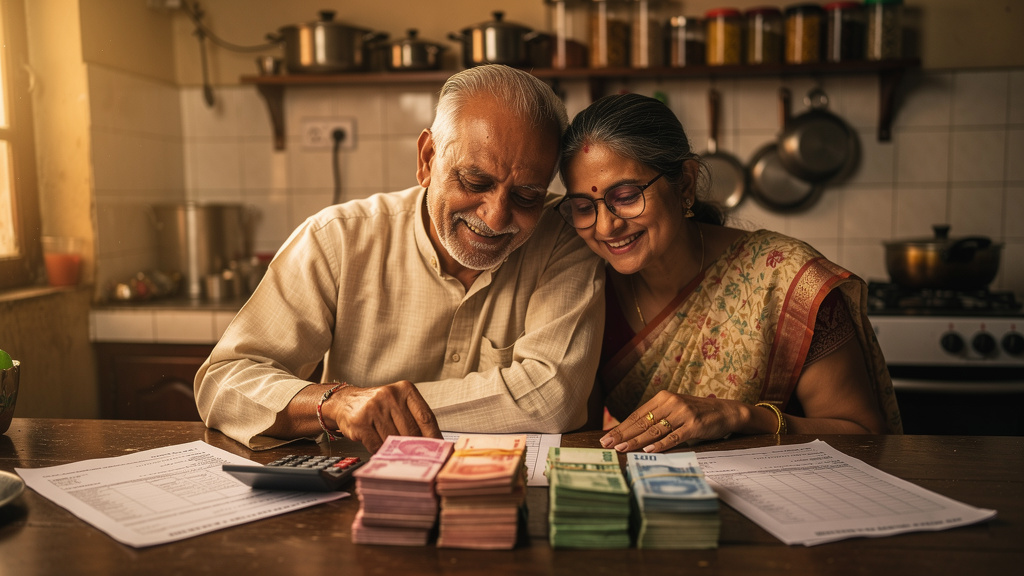
For most families understanding Why Choose Generics Over branded medicine, the biggest reason is simple arithmetic. Generics are usually 30–80% cheaper than their branded twins. Spread that gap across one month, one year, and several years of treatment, and the difference can be huge.
Imagine a person with diabetes:
- Branded tablets: ₹900 per month
- Generic alternative: ₹400 per month
- Monthly saving: ₹500
- Yearly saving: ₹6,000
- Ten-year saving: ₹60,000
That money can support school fees, better nutrition, or an emergency fund.
Now add blood pressure and cholesterol tablets. A family where three or four members take regular medicines for chronic conditions can easily see monthly bills of ₹3,000–₹4,000 with branded products. Switching to generics can cut this by half or more, which helps middle-income families and retired seniors living on fixed pensions.
Lower prices do more than free up cash; they also improve health. When tablets are affordable, people are less likely to:
- skip doses to make strips last longer
- delay refills
- stop treatment when money is tight
Better adherence enabled by the Benefits of Generic Medicines means more stable sugar, blood pressure, or cholesterol levels, fewer hospital visits, and a better quality of life.
This is where Zenerics steps in. We focus on genuine generic medicines that are often 50–70% cheaper than common branded equivalents. By listing prices clearly and making ordering simple, we turn the idea of savings into visible numbers on the monthly budget.
How Zenerics Makes Quality Generic Medicines Accessible To Every Indian
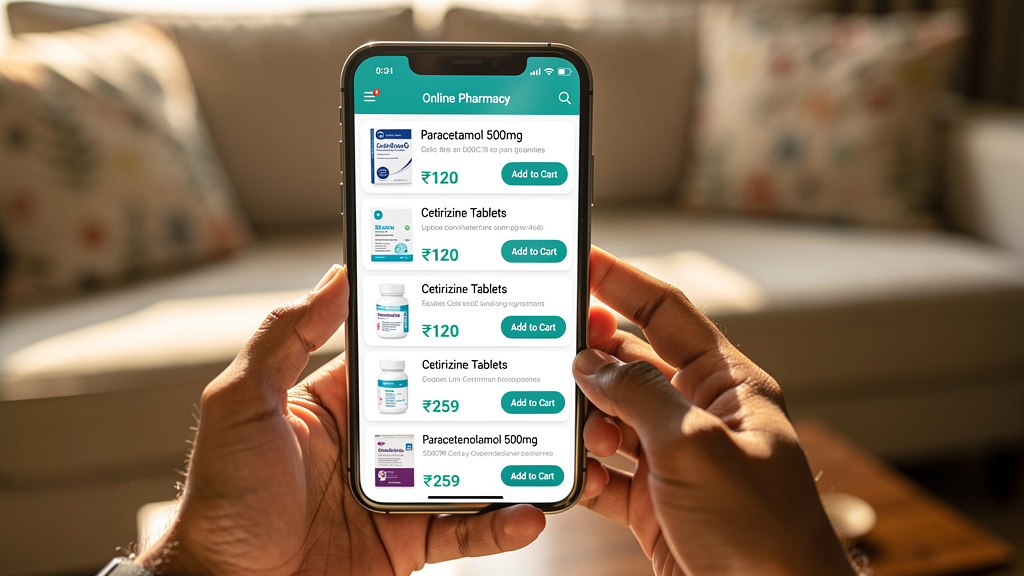
Cost is only one part of the story. People also worry about access and safety, especially when they live far from big city pharmacies or manage several prescriptions at once. That is why Zenerics has been built as an online-first pharmacy focused on generic medicines.
Our catalog covers a wide range of everyday needs:
- chronic care: diabetes, hypertension, heart health, thyroid, respiratory conditions
- regular requirements: pain relief, acidity, skincare, women’s health
- support products: nutritional supplements and wellness items
To build trust, every order passes through a double-checking process before dispatch. We work only with WHO-GMP certified manufacturers and treat product authenticity as non-negotiable. Our home delivery service covers metros, smaller towns, and many rural areas, so customers are not limited to the stock of the nearest chemist.
We also try to stretch every rupee by offering:
- free shipping on qualifying orders
- cashback on prepaid payments
Our website is kept simple so that even first-time online shoppers can use it comfortably. When people ask why Indians are choosing generic medicines over branded ones, access through platforms like Zenerics is now a big part of the answer.
Myths And Facts About Quality Concerns And Misconceptions
Even with science and regulations in place, doubts about generic medicines are common. Medicine is closely linked to trust and fear of risk, so questions are natural.
One frequent belief is that generics are weaker or take longer to work. In reality, CDSCO requires proof that a generic matches the branded drug in bioequivalence. The same amount of active ingredient must reach the blood in the same time window. If this standard is not met, the generic does not get approval.
Another myth is that generics must use poorer ingredients because they cost less. In truth:
- the active pharmaceutical ingredient (API) is the same
- the strength is the same
- WHO-GMP rules for hygiene, equipment, and quality checks apply to both branded and generic medicines
The price difference comes from lower research, patent, and advertising costs—not a lower safety bar.
It is true that some medical bodies, such as the Indian Medical Association, have raised concerns about how often batches are tested and about rare incidents like contaminated syrups, though Increasing early phase clinical trials in India continue to strengthen safety protocols. These must never be ignored, but they should be seen in context. India supplies a large share of the world’s generics to countries with strict regulators who inspect plants and review data regularly.
When a medicine passes repeated checks by both national regulators and major importing countries, it sends a strong signal about its quality and consistency.
At Zenerics, we add another layer of care. We source only from WHO-GMP certified manufacturers and maintain our own internal verification flow. This way, safety and quality depend not just on national rules but also on our own buying policies.
How Government Initiatives Promote Affordable Generic Medicines In India
India’s strength in generic drugs is rooted in long-term policy choices.
A key step was the Patent Act of 1970, which allowed patents on the process of making a drug, but not on the product itself. Indian companies could study a patented medicine, find a new way to make the same molecule, and sell it at a lower price. Over the next decades, the number of Indian pharmaceutical firms rose sharply, and by the mid-2000s, local companies held most of the domestic market.
Later, India signed the TRIPS agreement, which required the country to respect product patents again from 2005. This encouraged more research and development, but the habit of producing high-quality generics at lower prices remained.
To bring these benefits directly to citizens, the government launched the Pradhan Mantri Bhartiya Janaushadhi Pariyojana. Under this plan, Jan Aushadhi Kendras stock a wide range of affordable generics that often cost much less than popular branded versions. Many of these stores are in smaller towns and near government hospitals, helping people who cannot travel far or pay private chemist rates.
More recently, the National Medical Commission (NMC) has advised doctors to prescribe by generic name instead of brand name and has warned of penalties for ignoring this guidance. The aim is to reduce the influence of brand marketing and encourage more affordable choices.
Zenerics supports this vision as an online extension of these efforts. While Jan Aushadhi Kendras work through physical stores, we act as an online pharmacy for generic medicines that can reach homes across India. Public and private initiatives together make it easier for patients to move from branded options to safe, low-cost generics.
Breaking Brand Loyalty And How Doctors And Pharmacists Influence Prescribing Habits

For many years, the choice between a branded and a generic medicine did not really belong to patients. Doctors and pharmacists decided what went on the prescription and what came out of the medicine bag.
According to A Study of generic prescribing patterns, many doctors traditionally preferred branded medicines. Drug companies built strong ties with medical professionals by sponsoring conferences, funding educational events, and providing samples and other benefits. These activities made certain brand names very familiar. In a busy clinic, doctors often reached for the names they heard about most.
Pharmacists also had reasons to favor branded products. Branded drugs usually offer higher margins, so dispensing them can mean better profits per strip. In some cases, when a doctor writes only the generic name, a pharmacist may still choose a brand that earns more, not the cheapest option for the patient.
This web of financial and habit-based links is often called the doctor–pharma relationship and raises ethical questions. A doctor’s first duty is to the patient, but money and marketing can pull choices in another direction. The Medical Council of India’s code of conduct warns against taking gifts or benefits from companies, yet such practices have not completely disappeared.
NMC’s recent push toward generic prescriptions aims to bring medical science and patient cost back to the center. Doctors are asked to write the molecule name, not the brand, while patients and pharmacists are expected to use this freedom to pick effective, lower-cost options. Some doctors still worry that pharmacists will choose the highest-margin brand, which is why patient awareness is so important.
At Zenerics, we follow a neutral approach. We do not send medical representatives to clinics or tie doctors to particular brands. Instead, we present generic options clearly on our platform, along with prices and details, so patients can see for themselves why generics often make more sense.
The Power Of Branding And Marketing And Why Perception Matters
Medicines are not just chemicals; they are also stories. Branding uses these stories to build comfort and habit. When someone has taken a certain brand for years and felt better, the name itself starts to feel safe, almost like a trusted family doctor.
Drug companies spend heavily on marketing to build this feeling:
- television and print advertisements
- posters and standees in clinics
- glossy leaflets and regular visits from medical representatives
Over time, many people start to believe that a famous brand must be better tested or safer, even if there is no extra clinical proof to support that belief.
Generic manufacturers usually work with thinner margins and do not run big advertising campaigns. They may sell huge volumes to hospitals, government programs, or overseas buyers but still remain almost unknown to the average person. Many consumers simply do not realize that a cheaper, medically equivalent version of their regular medicine exists.
This gap in awareness keeps branded sales strong and slows down the move to generics. But things are changing. Government campaigns, social media discussions, and honest conversations between patients and doctors are shifting attention from brand names to active ingredients and real value.
At Zenerics, we try to speed up this shift by sharing clear, simple content on how generic medicines work. Our platform highlights the active ingredient, strength, and WHO-GMP status of products, so customers can see beyond the label.
How Online Pharmacies Like Zenerics Support Generic Medicine Adoption

Online pharmacies have given Indian patients a new way to buy medicines. Instead of standing at a counter and accepting whatever the chemist hands over, people can now compare options, prices, and details on their phones. This visibility is one more reason why Indians are choosing generic medicines over branded ones more often.
A major benefit of an online pharmacy for generic medicines is open price comparison. A user can type in the name of a branded medicine and instantly see generics with the same active ingredient and dose. When a branded strip costs ₹200 and the generic version costs ₹60, the difference is hard to ignore.
Online platforms also help people who find it difficult to visit physical stores:
- elderly patients
- people with mobility issues
- residents of remote locations
They can upload prescriptions, place orders from home, and get doorstep delivery. For those with chronic diseases, refill reminders and easy re-order options reduce the chance of missing doses.
Most local chemists have limited shelf space and may not stock many generic brands. In contrast, online pharmacies can maintain a wider inventory across hundreds of molecules from several WHO-GMP certified manufacturers. Product pages explain what each medicine is used for, how it should be stored, and what its main ingredients are.
Zenerics is designed with these needs in mind. Our interface tries to stay friendly even for people who are not very tech-savvy. We display clear pricing, show generic alternatives, and highlight savings so customers understand exactly how much they gain by switching.
Why Zenerics Is Your Trusted Online Pharmacy For Generic Medicines
When medicine arrives at your doorstep in a plain box, trust in the sender matters a lot. We take that responsibility seriously at Zenerics.
We partner only with WHO-GMP certified manufacturers, so the drugs we ship meet national and international quality rules. Before any package leaves our warehouse, our team checks the items against the order to confirm that the right generic, strength, and expiry date are being sent.
Our work is not limited to selling. Through simple articles and guides, we explain:
- how to read medicine labels
- why generic medicines cost less
- how to recognize a genuine online pharmacy for generic medicines
This helps customers feel more in control of their health choices.
To support tight budgets, we offer free shipping on qualifying orders, cashback on prepaid payments, and straightforward policies where the law allows. Our catalog covers common chronic conditions like diabetes, heart disease, and hypertension, along with day-to-day needs such as pain management, acidity, and supplements.
Our aim is simple: no one should skip a medicine just because it costs too much.
Conclusion
When we step back and look at the full picture, the shift toward generics in India makes clear sense. Generic medicines match branded drugs in active ingredient, dose, and effect, as checked through bioequivalence tests and CDSCO approval. They are produced in WHO-GMP certified plants, often the same ones that supply medicine to countries with strict regulators.
The biggest difference lies in price. By avoiding heavy research and advertising costs, generic manufacturers can offer the same medicine at 30–80% lower cost. For Indian families who buy medicine every month, this is not a small saving; it shapes long-term financial security and health.
Government steps like Jan Aushadhi Kendras and NMC’s push for generic prescriptions are gently moving the system away from blind brand loyalty. At the same time, online pharmacies give people clear information and side-by-side price views. All this explains why Indians are choosing generic medicines over branded ones in larger numbers every year.
At Zenerics, we want to be more than just a website selling tablets. Our aim is to stand beside patients as a reliable partner that combines affordability, authenticity, and clear information. The choice between branded and generic is now in your hands, and with the right knowledge, that choice can protect both your health and your wallet.
If you are ready to see how much you can save, visit Zenerics, search for your current branded medicines, and check the generic alternatives available. The first step toward smarter, more affordable care may be just one order away.
FAQs
Question 1: Are Generic Medicines As Effective As Branded Medicines?
Yes. Generic medicines approved by CDSCO are as effective as branded medicines. They contain the same active pharmaceutical ingredient in the same strength and are taken in the same way. Regulators check that the generic reaches the bloodstream at the same rate and in the same amount as the branded version. Because of this, the relief or control of the condition should be the same with either option.
Question 2: How Can Generic Medicines Be So Much Cheaper If They Are The Same Quality?
Generics are cheaper because of cost structure, not because of weaker standards. The original developer of a drug spends a lot on discovery, patents, and extensive clinical trials, and then adds heavy marketing budgets. Generic manufacturers come in after the patent period and use the known formula, so they do not repeat those steps. They only need to do bioequivalence studies and basic promotion, which keeps overheads low and allows them to pass savings on to patients.
Question 3: How Do I Know If The Generic Medicine I Am Buying Is Authentic And Safe?
The safest approach is to buy from licensed, well-known pharmacies, whether offline or online. In India, all generic medicines must be cleared by CDSCO and made in factories that follow WHO-GMP rules on hygiene, testing, and record-keeping. When you buy from a trusted online pharmacy for generic medicines such as Zenerics, you get an extra layer of safety because products are checked before dispatch and sourced only from approved manufacturers. It is also wise to examine the strip or bottle on arrival—look at packaging quality, batch number, manufacturing date, and expiry date.
Question 4: Will My Doctor Support My Decision To Switch To Generic Medicines?
Many doctors already support the use of generic medicines, and NMC guidelines now ask them to prescribe by generic name. Habits vary, so some doctors may still have brand preferences. The best step is to speak openly with your doctor about cost, explain that you are considering a generic version, and ask whether it is suitable for your case. In most situations, if the generic has the same molecule and strength and comes from a reliable source, doctors agree because the medical effect remains the same while the financial load becomes lighter.
Question 5: Can I Find Generic Alternatives For All My Prescribed Medications On Zenerics?
We aim to cover generic options for most common prescription needs, especially in chronic disease areas. On Zenerics, you can search using the name of your branded medicine and see if a matching generic is listed with the same active ingredient and dose. Our catalog includes diabetes care, heart and blood pressure drugs, pain relief, skincare, women’s health, and nutritional supplements. If you are unsure about a particular prescription, our customer support team can help you locate the right generic equivalent so you can discuss it with your doctor and make an informed choice.